

Duplex Stainless Steel 2205: A Buyer’s Guide to Grades, Properties, Applications and Sourcing
Duplex Stainless Steel 2205: What Buyers Need to Know Before Purchasing
When engineers and procurement teams start looking for duplex stainless steel, one grade appears again and again: 2205.
It is widely used for applications where conventional austenitic stainless steels such as 316L may not provide enough corrosion resistance or strength, while higher-alloyed grades such as 2507 may be unnecessarily expensive or difficult to fabricate.
That is the real position of Duplex 2205 stainless steel.
It is not the strongest stainless steel available. It is not the most corrosion-resistant duplex grade. And it is not always the cheapest option.
Instead, 2205 has become one of the most widely specified duplex stainless steels because it offers a practical balance of:
- High mechanical strength
- Good resistance to chloride-induced corrosion
- Good resistance to stress corrosion cracking
- Strong resistance to pitting and crevice corrosion
- Relatively good weldability
- Lower nickel content than many austenitic grades
- Broad international standards coverage
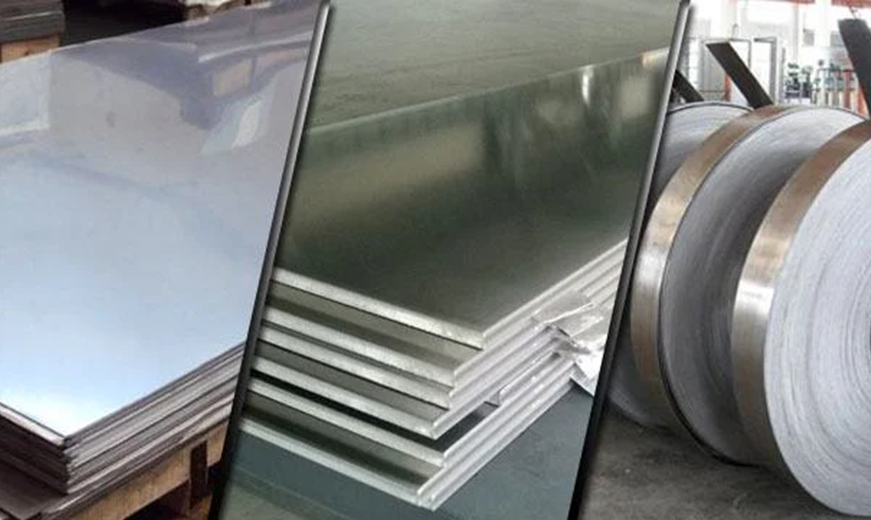
- Wide availability in plates, sheets, coils, pipes, tubes, bars and fittings
For buyers, however, choosing 2205 is more complicated than simply writing “2205 stainless steel” on a purchase order.
The grade designation, applicable standard, product form, heat treatment, testing requirements, surface condition and certification all matter.
This guide explains what buyers should know before purchasing Duplex 2205 stainless steel from China or other international suppliers.
Related Products:
Stainless Steel Coil&Strips Stainless Steel Sheet Stainless Steel Tubes&Pipes Stainless Steel Angle Stainless Steel Flat Bar Stainless Steel Round Bars
1. What Is Duplex Stainless Steel 2205?
Duplex stainless steel 2205 is a nitrogen-alloyed stainless steel with a two-phase microstructure consisting primarily of approximately equal proportions of:
- Austenite
- Ferrite
The most common specifications associated with 2205 include:
| Designation | Common Standard / System |
|---|---|
| UNS S32205 | ASTM / ASME |
| UNS S31803 | ASTM / ASME |
| EN 1.4462 | European designation |
| 1.4462 | EN material number |
| 2205 | Common commercial designation |
| 022Cr23Ni5Mo3N | Chinese designation |
The name 2205 comes broadly from its nominal alloy composition, particularly approximately 22% chromium and 5% nickel.
However, buyers should not assume that every product described commercially as “2205” has exactly the same chemical composition or performance.
The actual purchasing specification should identify the required UNS designation and applicable product standard.
For demanding projects, UNS S32205 is often preferred because its chemistry requirements are more tightly controlled than the older S31803 specification.
2. Why Has 2205 Become So Popular?
The biggest advantage of 2205 is not one extraordinary property.
It is the combination of several properties.
Compared with conventional 300-series stainless steels, Duplex 2205 typically provides significantly higher yield strength and improved resistance to chloride-related corrosion mechanisms.
At the same time, it does not require the alloy content associated with some super duplex or nickel-based alloys.
This creates a useful middle position:
| Grade | Typical Position |
|---|---|
| 304 / 304L | General-purpose stainless steel |
| 316 / 316L | Better chloride and corrosion resistance |
| 2205 Duplex | High strength + strong corrosion resistance |
| 2507 Super Duplex | More severe chloride and marine environments |
| Nickel alloys | Extreme corrosion environments |
This is why engineers frequently evaluate 2205 vs 316L stainless steel when designing chemical processing equipment, tanks, piping systems, offshore equipment and other corrosion-resistant structures.
3. Duplex Stainless Steel 2205 Properties
For procurement decisions, chemical composition alone is not enough.
The mechanical properties, corrosion resistance and manufacturing characteristics all need to be considered.
Chemical Composition
Typical chemistry requirements depend on the applicable standard, but Duplex 2205 generally contains approximately:
- Chromium: around 22%
- Nickel: around 5%
- Molybdenum: around 3%
- Nitrogen: approximately 0.14–0.20%
- Carbon: low, typically ≤0.03%
The combination of chromium, molybdenum and nitrogen is particularly important for corrosion resistance.
Nitrogen also contributes to strength and helps maintain an appropriate austenite/ferrite balance after welding.
4. Why Is 2205 Stronger Than 316L?
One of the most important reasons buyers select Duplex 2205 is its mechanical strength.
Its yield strength is typically around twice that of common austenitic stainless steels such as 316L, depending on product form and applicable standard.
This creates a potential engineering advantage.
If the design code and engineering calculations allow it, a higher-strength material can sometimes enable:
- Reduced wall thickness
- Lower component weight
- Smaller structural sections
- Reduced material consumption
- Potential transportation savings
However, buyers should never assume that 2205 allows a component to be made half as thick simply because its yield strength is approximately twice as high.
Actual thickness selection depends on:
- Design pressure
- Temperature
- Corrosion allowance
- Fatigue
- Buckling
- Fabrication
- Applicable design code
- Welded joint efficiency
- Service environment
In other words:
Higher material strength creates a design opportunity, not an automatic thickness reduction.
5. 2205 Stainless Steel Corrosion Resistance
Corrosion resistance is one of the major reasons to choose 2205 duplex stainless steel.
Its chromium, molybdenum and nitrogen content provides significantly improved resistance to localized corrosion compared with many standard austenitic stainless steels.
The material is particularly valuable where chloride exposure creates concerns about:
- Pitting corrosion
- Crevice corrosion
- Chloride stress corrosion cracking
A commonly used indicator is the Pitting Resistance Equivalent Number (PREN):
PREN = Cr + 3.3Mo + 16N
Depending on the actual chemistry, Duplex 2205 typically has a PREN in the mid-30s.
This is substantially higher than the typical PREN range associated with 316L.
However, PREN should be treated as a comparative alloy-design indicator rather than a guarantee of service life.
Actual corrosion performance depends on the complete system, including:
- Chloride concentration
- Temperature
- pH
- Flow velocity
- Surface condition
- Crevices
- Deposits
- Welding
- Heat treatment
- Pickling and passivation
6. 2205 vs 316L Stainless Steel: Which Should Buyers Choose?
This is one of the most important purchasing decisions.
316L remains an excellent material for many applications because it is:
- Widely available
- Relatively easy to fabricate
- Easy to machine compared with duplex grades
- Well understood by fabricators
- Cost-effective for moderate corrosion environments
But 2205 becomes increasingly attractive when both strength and chloride corrosion resistance are important.
2205 vs 316L
| Factor | 316L | Duplex 2205 |
|---|---|---|
| Microstructure | Austenitic | Duplex |
| Strength | Moderate | High |
| Chloride SCC resistance | Moderate | Better |
| Pitting resistance | Good | Higher |
| Nickel content | Higher | Lower |
| Fabrication | Easier | More demanding |
| Machining | Easier | More difficult |
| Typical cost position | Lower | Higher than 316L |
| Weight reduction potential | Limited | Greater |
| High-chloride applications | Limited depending on conditions | Often preferred |
For procurement teams, the important question is not:
“Is 2205 better than 316L?”
The better question is:
“Does the application justify the additional cost and fabrication requirements of 2205?”
7. 2205 vs 2507: When Should You Upgrade to Super Duplex?
2205 is not a universal marine-grade solution.
For particularly aggressive chloride environments, engineers may need to evaluate Super Duplex 2507 or other highly alloyed stainless steels.
A simplified comparison is:
| Material | Typical Application Position |
|---|---|
| 316L | Moderate corrosion conditions |
| 2205 Duplex | High-strength and chloride-resistant general engineering |
| 2507 Super Duplex | More severe chloride / marine environments |
2507 generally offers higher corrosion resistance than 2205, but this comes with increased alloy cost and more demanding fabrication controls.
Therefore, using 2507 everywhere would not necessarily be good engineering or good procurement.
For many projects, 2205 provides sufficient performance without paying for unnecessary alloying.
8. S31803 vs S32205: What Should Buyers Specify?
This is one of the most important details when purchasing 2205.
The terms S31803 and S32205 are sometimes both marketed as “2205.”
They should not simply be treated as interchangeable without checking the actual specification.
S32205 places tighter requirements on important alloying elements, including chromium, molybdenum and nitrogen.
For buyers, this matters because the chemistry affects:
- Corrosion resistance
- PREN
- Phase balance
- Welded properties
- Overall consistency
Therefore, instead of writing only:
“2205 stainless steel”
a professional purchase specification should identify the exact required grade and standard.
For example:
Duplex Stainless Steel UNS S32205, ASTM A240, solution annealed and pickled
The actual requirement should of course be determined by the engineering specification and product form.
9. What 2205 Stainless Steel Products Can Buyers Purchase?
A major advantage of 2205 is its mature supply chain.
Buyers can source it in many product forms, including:
2205 Stainless Steel Sheet
Used for:
- Tanks
- Fabricated equipment
- Structural components
- Chemical processing equipment
- General corrosion-resistant fabrication
2205 Stainless Steel Plate
Commonly selected for:
- Pressure equipment
- Large tanks
- Process equipment
- Offshore structures
- Heavy-duty fabrication
2205 Stainless Steel Coil
Depending on thickness, width and processing requirements, 2205 coil can be supplied for:
- Fabrication
- Slitting
- Cut-to-length processing
- Industrial components
- Further manufacturing
2205 Stainless Steel Pipe and Tube
Common applications include:
- Process piping
- Oil and gas
- Chemical processing
- Water treatment
- Offshore systems
- Heat exchanger applications
2205 Bar, Forgings and Fittings
The mature 2205 ecosystem also includes:
- Round bars
- Forged components
- Flanges
- Butt-weld fittings
- Valves
- Other fabricated components
This broad availability is one of the reasons 2205 has become a mainstream engineering material rather than a niche specialty alloy.
10. Where Is Duplex Stainless Steel 2205 Used?
The application range of 2205 is broad.
Typical industries include:
Oil & Gas
2205 is used in applications where strength and resistance to chloride-containing environments are important.
Potential applications include:
- Process piping
- Flow lines
- Pressure-containing components
- Offshore equipment
- Separation equipment
Chemical Processing
2205 can be used for:
- Storage tanks
- Process vessels
- Piping
- Heat exchangers
- Chemical handling equipment
The exact suitability depends heavily on the chemical composition, temperature and operating conditions.
Water and Wastewater Treatment
2205 is often considered for:
- Desalination-related equipment
- Water treatment systems
- Chloride-containing process water
- Tanks and piping
Pulp and Paper
The combination of strength and corrosion resistance makes duplex stainless steels attractive in selected pulp and paper processing environments.
Marine and Offshore
2205 can be suitable for many offshore applications, but buyers should not interpret “marine grade” as meaning that 2205 is automatically suitable for every seawater condition.
For extremely aggressive seawater exposure, 2507 or other materials may be required.
11. Is Duplex 2205 Easy to Weld?
2205 is weldable, but welding requires more process control than conventional 304L or 316L.
The reason is its duplex microstructure.
During welding, the thermal cycle can change the balance between ferrite and austenite.
If the welding process is poorly controlled, the heat-affected zone may experience:
- Excessive ferrite
- Reduced corrosion resistance
- Reduced toughness
- Unfavorable phase balance
Excessive heat exposure can also create undesirable intermetallic phases.
Therefore, the welding procedure should be developed and qualified according to the applicable project requirements.
Common welding considerations include:
- Heat input
- Interpass temperature
- Filler metal selection
- Shielding gas
- Cooling rate
- Joint preparation
- Post-weld inspection
For many applications, ER2209 filler metal is associated with welding 2205 duplex stainless steel, but the final welding consumable selection should follow the qualified welding procedure.
12. 2205 Stainless Steel Machining Is Different From 316L
Another issue procurement teams sometimes discover too late is machining.
2205 has higher strength than 316L.
That means fabricators may experience:
- Higher cutting forces
- Greater tool wear
- More heat generation
- Greater sensitivity to cutting conditions
The solution is not to avoid 2205.
It is to use machining parameters and tooling appropriate for duplex stainless steel.
If a project involves significant machining, buyers should communicate the material grade to the fabricator before production rather than treating 2205 like ordinary 304 or 316L.
13. What Should You Check Before Buying 2205 Stainless Steel?
This is where material selection becomes procurement.
A buyer should not evaluate a 2205 supplier based solely on price per ton.
Before issuing a purchase order, consider at least the following:
1. Exact Grade
Confirm whether the requirement is:
- UNS S31803
- UNS S32205
- EN 1.4462
- Another project-specific designation
2. Product Standard
For example:
- ASTM
- ASME
- EN
- Project-specific standards
The standard must correspond to the actual product form.
3. Dimensions
Clearly specify:
- Thickness
- Width
- Length
- Coil weight
- Outside diameter / wall thickness for pipe
- Dimensional tolerances
4. Delivery Condition
Confirm requirements such as:
- Solution annealed
- Pickled
- Passivated
- Other specified surface conditions
5. Mechanical Properties
Confirm:
- Yield strength
- Tensile strength
- Elongation
- Impact requirements where applicable
6. Chemical Composition
Request a material test certificate showing the actual heat chemistry.
7. Ferrite / Phase Balance
For demanding applications, confirm whether the project specification requires metallographic examination or ferrite control.
8. Corrosion Testing
Depending on the application, additional testing may be required.
9. Third-Party Inspection
For major projects, buyers may require inspection by an independent inspection organization.
10. Traceability
Heat number and material identification should remain traceable from the mill certificate to the supplied material.
14. Why Buying 2205 From an Experienced Export Supplier Matters
A common misconception is that buying stainless steel is simply a matter of finding the lowest price.
For standard 304 sheets, this may sometimes be relatively straightforward.
For Duplex 2205 stainless steel, the supply chain requires more technical understanding.
A competent supplier should be able to discuss:
- Grade selection
- S31803 vs S32205
- ASTM / ASME / EN standards
- Product dimensions
- Surface requirements
- Heat treatment
- MTC documentation
- Inspection requirements
- Export packaging
- Container loading
- International shipping
- Project-specific documentation
This is particularly important when buying from China.
The buyer may be dealing with a trading company, service center, stockholder or actual mill.
Understanding the supplier’s role helps prevent misunderstandings regarding:
- Manufacturing origin
- Certification
- Lead time
- Available inventory
- Processing capability
- Minimum order quantity
15. Why Consider a China-Based 2205 Stainless Steel Supplier?
China has one of the world’s largest stainless steel production and processing ecosystems.
For international buyers, sourcing from China can provide access to:
- Large production capacity
- Multiple stainless steel mills
- Processing facilities
- Slitting and leveling services
- Cut-to-length processing
- Export logistics
- Competitive international pricing
However, supplier selection is more important than simply selecting China as the sourcing country.
Buyers should verify:
- The actual material source
- Applicable product standard
- Chemical composition
- Mechanical test results
- Surface condition
- Dimensional tolerances
- Heat number traceability
- Inspection documentation
- Packaging
- Export experience
16. How Orinox Steel Helps International Buyers Source 2205
Orinox Steel is a China-based stainless steel export trading company serving international B2B buyers.
Rather than presenting ourselves simply as a manufacturer of every stainless steel product, our role is to connect overseas buyers with suitable Chinese stainless steel production and processing resources according to their specifications.
For Duplex 2205 projects, this can include sourcing and coordinating:
- 2205 stainless steel sheets
- 2205 stainless steel plates
- 2205 stainless steel coils
- 2205 stainless steel pipes
- 2205 stainless steel tubes
- 2205 bars and other products
- Cutting and processing requirements
- Export packaging
- Inspection and documentation
- International shipment
For project-based purchasing, the objective is not simply to quote a low price.
The objective is to match:
Material → Specification → Processing → Inspection → Documentation → Logistics
so that the material arriving at the customer’s facility matches the technical and commercial requirements agreed before shipment.
17. Is 2205 Stainless Steel Right for Your Project?
Use this simplified decision framework.
Consider 316L when:
- Corrosion conditions are moderate
- Fabrication simplicity is important
- Extremely high strength is unnecessary
- The project is highly cost-sensitive
Consider 2205 when:
- Chlorides are a significant concern
- Higher strength is valuable
- Stress corrosion cracking resistance matters
- Weight reduction may benefit the design
- 316L is becoming marginal
- 2507 appears unnecessarily expensive
Consider 2507 or higher-alloy materials when:
- Chloride exposure is extremely aggressive
- High-temperature seawater is involved
- Severe pitting or crevice corrosion is expected
- The engineering specification requires higher corrosion resistance
The correct material is therefore not necessarily the strongest grade.
It is the grade that provides the required performance margin at an acceptable total cost and fabrication risk.
18. 2205 Stainless Steel Buyer Checklist
Before purchasing Duplex 2205, ask your supplier these questions:
Material
- Is the material UNS S31803 or S32205?
- Which ASTM, ASME or EN standard applies?
- Is the material solution annealed?
Dimensions
- What thickness and width are available?
- What dimensional tolerances apply?
- Is the requested size available from stock or production?
Quality
- Can you provide the MTC?
- Is heat-number traceability available?
- Can third-party inspection be arranged?
- Is phase balance / ferrite testing available if required?
Surface
- Is the surface pickled?
- Is passivation required?
- What surface finish is available?
Commercial
- What is the MOQ?
- What is the production lead time?
- What is the packing method?
- What is the loading quantity per container?
- What export documents are included?
A supplier that can answer these questions clearly is usually a much better starting point than one that only provides a price per kilogram.
Conclusion: Why 2205 Remains the Practical Duplex Stainless Steel Choice
Duplex stainless steel 2205 has become one of the most widely recognized duplex stainless steel grades because it does not depend on being the absolute best at one single property.
Its advantage is balance.
It combines:
High strength + chloride corrosion resistance + useful weldability + relatively moderate alloy cost + mature global supply
That makes it particularly attractive for applications where 316L is approaching its performance limits but 2507 or nickel alloys would provide more performance than the project actually requires.
For buyers, however, the key lesson is simple:
Do not purchase “2205” as a generic commodity. Purchase the correct duplex grade, product standard, dimensions, delivery condition, testing and documentation for your application.
If you are sourcing 2205 stainless steel sheet, plate, coil, pipe or other duplex stainless steel products from China, Orinox Steel can help evaluate the specification, coordinate suitable Chinese supply resources and arrange export delivery according to your project requirements.
Request a 2205 stainless steel quotation from Orinox Steel and send us your required grade, dimensions, quantity, standard and destination.