

316L vs 304 Stainless Steel
Technical Comparison Between 316l Stainless Steel and 304 Stainless Steel
What is the difference between 316L and 304 stainless steel? How to distinguish 316L and 304 stainless steel? Compare 316L and 304 stainless steel in terms of structural composition, heat resistance, corrosion resistance and machining techniques.
316L stainless steel and 304 stainless steel are two types of stainless steel that often appear on the market. 316L and 304 steel are widely applied in industry groups from production to consumption. Let’s learn the advantages and disadvantages of 316L and 304 stainless steel.
Related Products:
304 Stainless Steel Sheet 304 Stainless Steel Coil Stainless Steel Strip 316L Stainless Steel Sheet 316L Stainless Steel Coil Seamless Stainless Steel Pipe Stainless Steel Welded Pipe Stainless Steel Angle Stainless Steel Flat Bar Stainless Steel Round Bars Hairline Stainless Steel Sheet Decorative Stainless Steel Pipes Stainless Steel Circle
Comparison of 316l stainless steel and 304 Stainless Steel on structural composition
304 stainless steel is mainly composed of 2 components, chromium (Cr) and nickel (Ni). For 316l stainless steel is similar, in addition to the addition of Molybdenum (Mo), especially the carbon content (C) in 316l is very low.
In addition to the differences in the main structural components, let’s dive into the analysis of the chemical components contained in stainless steel 316l and 304 to see more clearly the difference through the table below:
| Component | 304 | 316l |
|---|---|---|
| Iron | Balance | Balance |
| Carbon | 0.0 – 0.07% | < 0.08% |
| Chromium | 17.50 – 19.50% | 16 – 18% |
| Manganese | 0.0 – 2.0% | < 2.0% |
| Silicon | 0.0 – 1.0% | < 1.0% |
| Phosphorous | 0.0 – 0.05% | 0.045% |
| Sulphur | 0.0 – 0.03% | < 0.30% |
| Nickel | 8.0 – 10.5% | 10 – 14% |
| Nitrogen | 0.0 – 0.11% | 0.0 – 0.1% |
Corrosion resistance of 316l stainless steel and 304 stainless steel
304 stainless steel: The corrosion resistance of 304 steel is the basic characteristic of stainless steel with the ability to resist oxidation in the solvent, ensuring performance. But the weakness is the salt or highly acidic environment will be easy to fly color.
316L stainless steel: This ability is superior to 304 steel because of the 2 to 3% molybdenum (Mo) component in 316l steel. This component allows resistance to corrosion from chlorides (such as salts in seawater) so it is preferred by the marine industry.
Heat resistance of 316l stainless steel and 304 stainless steel
304 stainless steel: Melting temperatures lower than 500 degrees Celsius are easier to process, which is why 304 is more widely used and popular than 316L.
316L stainless steel: In contrast, the high melting temperature up to more than 900 degrees Celsius makes the formation of 316L stainless steel more difficult, more processing costs lead to high product prices.
Machinability of 316l stainless steel and 304 stainless steel
304 stainless steel: The characteristic processing ability of 304 stainless steel is inlaid without heat treatment, helping to save maximum production costs as well as not requiring too high technical machinery.
316L stainless steel: In contrast to 304 stainless steel, processing 316L stainless steel costs more when high temperatures are required, making the processing more complicated, requiring experience and high technical machinery. The only advantage in 316L steel is better weldability.
Hardness of 316l stainless steel compared to 304 stainless steel
304 stainless steel: The hardness of 304 stainless steel is guaranteed by the content of carbon (C) in the structure. Ensure the product is not deformed over time or in harsh environments thanks to internal strong bonds.
316L stainless steel: This is also the weakness of 316L steel with very little carbon content (C), resulting in poorer bearing strength. But it will save more energy when processing use.
Difference between 316l Stainless Steel and 304 Stainless Steel
Stainless Steel 304 other than 316L: Although it is difficult to use the common eye to distinguish these two types of stainless steel 316l and 304. But based on the characteristics and advantages mentioned above, the following are some basic characteristics used to distinguish stainless steel 304 and 316L.
Due to the composition of chromium (Cr) and Luu Huynh (S), 304 stainless steel is smooth but still small pitting on the surface. Conversely, thanks to Mo, the corrosion resistance of 316L stainless steel is higher leading to no surface pitting.
Being able to process inlays immediately without the impact of temperature is also the basic way to distinguish stainless steel 316l and 304. And especially it is the default stainless steel 304 for stainless steel products such as pots, washers.
Due to the composition and proportion of different substances, the specific mass of 304 steel is lighter than 306L steel. This is also one of the basic ways to distinguish two types of steel 316l and 304 often used with small details.
Finally, it is the price of the product, surely 304 stainless steel is cheaper than 306 steel by processing characteristics without heat. Help maximize profits for businesses.
Which 316l Stainless Steel and 304 Stainless Steel are better?
Each type of stainless steel whether 304 and 316L or any type has different advantages and disadvantages so no type is the best but only depending on the purpose and needs of your company.
Or it can be said that 304 stainless steel represents fields with simple production conditions, low product prices. In contrast, 316L stainless steel is often used for heavy industries, toxic to more harsh environments.
Where to buy 316l stainless steel and 304 stainless steel?
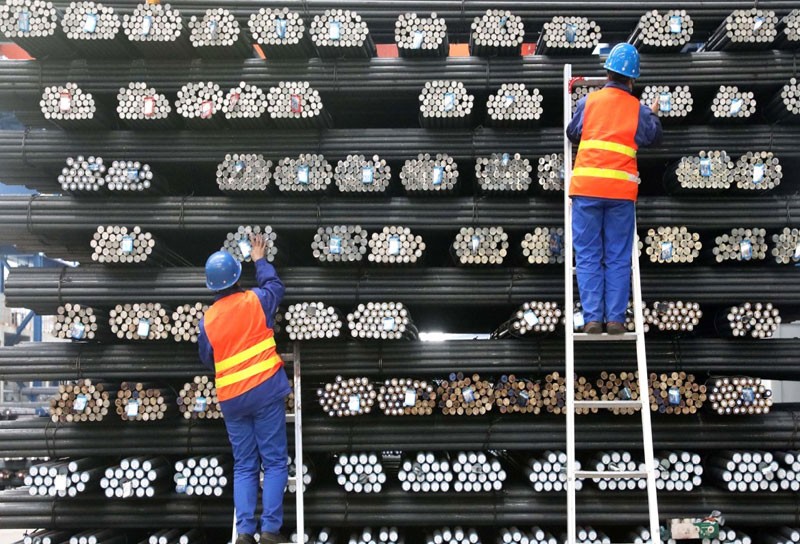
To choose a consultant as well as ensure the quality of 316l and 304 steel products suitable for your needs, please contact Orinox Steel.
With many years of export and installation experience, we are confident with consulting services and provide stainless steel 304 and 316L with the cheapest price and the most guaranteed quality.