


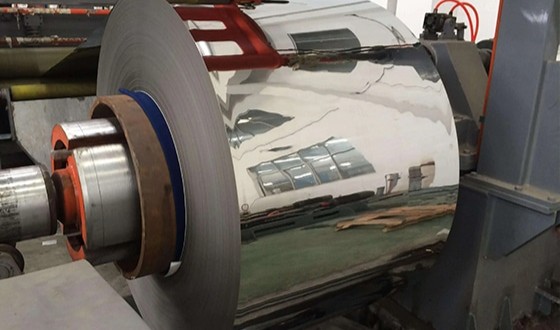
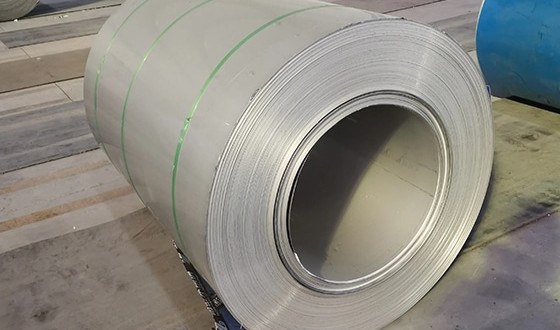
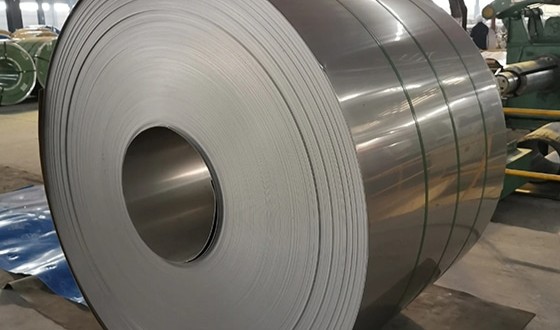
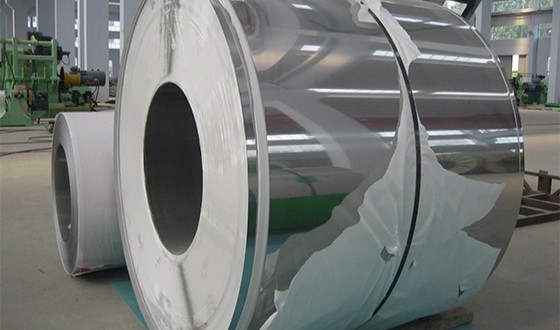
Grade: 420 (ASTM A240)
Thickness: 0.15 – 3.0mm (customizable)
Width: 600–1500mm (customizable)
Surface Finish: BA/2B/NO.1/NO.4/4K/HL/8K/EMBOSSED or according to customer requirementg,etc.
Tensile Strength: ≥655 MPa
Elongation: ≥24%
| Parameter | Details |
|---|---|
| Material Grade | 420 (ASTM A240/UNS S42000) |
| Thickness Range | 0.15 – 3.0 mm (customizable) |
| Width Range | 600 mm – 1500 mm (customizable) |
| Surface Finish | BA/2B/NO.1/NO.4/4K/HL/8K/EMBOSSED or according to customer requirementg,etc. |
| Tensile Strength | ≥ 655 MPa (min) |
| Elongation | ≥25% |
| Yield Strength | ≥ 345 MPa (min) |
| Chemical Composition | Chromium (Cr): 12.0% – 14.0%; Manganese (Mn): ≤ 1%; Silicon (Si): ≤ 1%; |
Classification of 420 Stainless Steel Coil
420 stainless steel coil mainly includes several variants such as 420J1 stainless steel and 420J2 stainless steel, which are widely used martensitic stainless steels. These grades differ primarily in their carbon content, hardness, and wear resistance.
Depending on chemical composition, surface finish, and manufacturing specifications, 420 stainless steel coils can be classified into different categories. Understanding these classifications helps buyers select the most suitable material for their applications.
Composition of 420 Stainless Steel Coil
The main chemical components of 420 stainless steel coil include chromium (Cr), carbon (C), iron (Fe), silicon (Si), manganese (Mn), and phosphorus (P). These elements determine the hardness, corrosion resistance, and mechanical strength of the material.
420 stainless steel is known for its high hardness after heat treatment, making it suitable for applications requiring wear resistance and moderate corrosion resistance.
- 420 J1 Stainless Steel Coil
420J1 stainless steel coil contains lower carbon content (around 0.15–0.25%) and 12–14% chromium. Due to its lower carbon level, it provides better corrosion resistance and toughness, but the hardness after heat treatment is slightly lower than that of 420J2.
This grade is commonly used in cutlery, surgical instruments, and precision components.
- 420 J2 Stainless Steel Coil
420J2 stainless steel coil contains higher carbon content (around 0.26–0.40%), which significantly increases its hardness and wear resistance after heat treatment.
Because of its improved hardness, 420J2 is widely used for knives, scissors, industrial blades, and mechanical parts that require strong edge retention.
Surface of 420 Stainless Steel Coil
The surface finish of 420 stainless steel coil plays an important role in appearance, corrosion resistance, and application suitability.
- 420 Stainless Steel Coil BA Surface: The BA (Bright Annealed) finish is obtained through bright annealing in a controlled atmosphere. It produces a smooth, reflective surface, making it suitable for decorative and precision applications.
- 420 Stainless Steel Coil 2B Surface: The 2B finish is one of the most widely used finishes for stainless steel coils. It is produced through cold rolling, heat treatment, and pickling, resulting in a smooth and moderately reflective surface that is suitable for industrial processing.
- 420 Stainless Steel Coil No.1 Surface: The No.1 surface finish is produced by hot rolling followed by annealing and pickling. It has a rougher matte appearance and is commonly used in industrial applications where surface aesthetics are less important.
- 420 Stainless Steel Coil HL Surface: HL (Hairline) finish features continuous fine polishing lines on the surface. This finish is commonly used for decorative panels, elevator interiors, and architectural applications.
- 420 Stainless Steel Coil Dull Surface: The Dull finish has a low-gloss matte appearance, providing a subtle texture suitable for industrial and architectural uses where reflections are undesirable.
Size of 420 Stainless Steel Coil
420 stainless steel coils are produced in both standard and customized sizes to meet various industrial requirements. The thickness, width, and coil weight directly affect pricing and manufacturing processes.
Before production or shipment, measurements are strictly controlled to ensure compliance with specified tolerances.
Thickness of 420 Stainless Steel Coil
These thicknesses are widely used for precision components, industrial blades, and structural applications:
-
-
0.2 – 1mm
-
2mm
-
3mm
-
5mm
-
6mm
-
8mm
-
10mm
-
Width of 420 Stainless Steel Coil
Most customers seeking 420 stainless steel coil will typically find standard widths available. However, there are custom orders for specific applications. The requested width should not deviate too much from the standard measurements. Below are the most common coil widths:
-
-
1000mm
-
1220mm
-
1500mm
-
1550mm
-
Length of 420 Stainless Steel Coil
-
-
1000mm
-
2000mm
-
2440mm
- 3000mm
-
6000mm
-
Weight of 420 Stainless Steel Coil
The weight of the coil is calculated based on the accurate measurements of its length, width, and thickness:
Weight (kg) = Width (m) x Length (m) x Thickness (mm) x 7.93 (g/m³)
Applications of 420 Stainless Steel Coil in Interior Design:
Due to its beautiful appearance and easy cleaning properties, 420 cold-rolled stainless steel coils are also commonly used in construction and decoration fields, such as indoor and outdoor decorative panels, handrails, railings, etc.
Applications of 420 Stainless Steel Coil in Knife Manufacturing:
Because the 420 cold-rolled stainless steel coil has good wear resistance and corrosion resistance, it is often used in knife manufacturing, including kitchen knives, surgical blades, etc.
Applications of 420 Stainless Steel Coil in Industrial Equipment Manufacturing:
In the industrial field, 420 cold-rolled stainless steel coils are often used to manufacture parts and mechanical components, such as valves, pump bodies, bearings, bolts, etc.
Automobile Industry: Stainless steel is increasingly used in automobile manufacturing. 420 cold-rolled stainless steel coils are often used in the manufacture of automobile exhaust systems, exhaust pipes, exhaust manifolds, and other components to improve their corrosion resistance and wear resistance.
Applications of 420 Stainless Steel Coil in the Chemical Industry:
In the chemical industry, 420 cold-rolled stainless steel coils are often used to manufacture storage tanks, pipelines, reactors, and other equipment to cope with harsh working environments and corrosive media.

| Comparison Items | 200 Series (201) | 300 Series (304 as a representative) | 400 Series (430 as a representative) |
|---|---|---|---|
| Chemical Composition | Chromium (Cr) 16% – 18%, manganese (Mn) 5.5% – 7.5%, nickel (Ni) 3.5% – 5.5%, nitrogen (N) ≤0.25% | Chromium (Cr) 18% – 20%, nickel (Ni) 8% – 10.5%, low carbon | Chromium (Cr) 16% – 18%, low carbon, ferrite structure |
| Tensile Strength (MPa) | ≥520 | ≥515 | ≥450 |
| Elongation (%) | ≥40 | ≥40 | ≥22 |
| Corrosion Resistance | Moderate corrosion resistance, suitable for less corrosive environments. Prone to rusting in humid or corrosive conditions compared to 300 series. | Good general corrosion resistance, suitable for general atmosphere, fresh water and other environments, relatively weak tolerance to chloride ions | Fair corrosion resistance, better than carbon steel but inferior to 300 series. Susceptible to pitting corrosion in chloride-rich environments. |
| Magnetic Properties | Weakly magnetic due to its alloy composition | Non-magnetic in the annealed state, may become slightly magnetic under certain processing conditions | Magnetic |
| Cost | Relatively low, due to lower nickel content and relatively simple composition | Moderate, as a widely used and reliable grade | Relatively low, similar to 200 series in terms of cost, but with different performance characteristics |
| Application Fields | Interior decoration, low-end kitchenware, some decorative trims in buildings where corrosion resistance requirements are not high | Kitchen utensils, building decoration, general industrial components and other daily fields | Appliance housings, automotive trim, some food processing equipment where non-magnetic properties are not required and moderate corrosion resistance suffices |
Why Choose Our 420 Stainless Steel Coil?
-
Superior Quality Assurance: Our 420 stainless steel coil is manufactured under strict quality control procedures. From raw material selection to rolling, annealing, and final inspection, every step follows international standards such as ASTM and JIS. This ensures stable chemical composition, reliable hardness after heat treatment, and consistent performance for industrial applications.
-
Customization Options: We understand that different industries require different specifications. Our 420 stainless steel coils can be customized in terms of thickness, width, hardness condition, and surface finish (including 2B, BA, No.4, and HL). Whether you need coil, strip, or cut sheets, we can supply materials tailored to your production needs.
- Excellent Hardness and Wear Resistance: 420 stainless steel is a martensitic stainless steel known for its high hardness after heat treatment. Grades such as 420J1 and 420J2 offer excellent wear resistance and edge retention, making them ideal for applications such as industrial blades, knives, scissors, surgical instruments, and precision mechanical components.
-
Competitive Pricing: With efficient production lines and stable raw material sourcing, we are able to supply high-quality 420 stainless steel coils at competitive factory prices, helping customers reduce procurement costs while maintaining reliable material performance.
-
Expert Technical Support: Our experienced technical team can provide guidance on grade selection, heat treatment conditions, and fabrication processes. Whether you need assistance choosing between 420J1 and 420J2, or require recommendations for specific applications, we are ready to support your project.
Contact Us
Ready to source high-quality 420 stainless steel coil for your next project?Contact our team today for technical consultation, pricing, and customized solutions.